Years of experience tell me very little in an interview. The signal I trust most is a candidate who brings up a decision they got wrong without being asked, and explains what it taught them about the next one. Anyone can describe a project that went well. People who have made enough real decisions have made bad ones, and the senior ones have thought about why.
The second one: they ask about on-call before they ask about the tech stack. That tells me they've carried the pager. The stack is the easy part to learn. How a team handles production, incidents and sleep shapes the job far more.
Building something like this?
I'm Ahmed Mamdouh, a senior full-stack and AI engineer. I reply within one working day.
The systems I am proud of are built from boring parts
The systems I'm proudest of use Postgres, a queue and a cache with a written invalidation rule. The real engineering was in the failure handling.
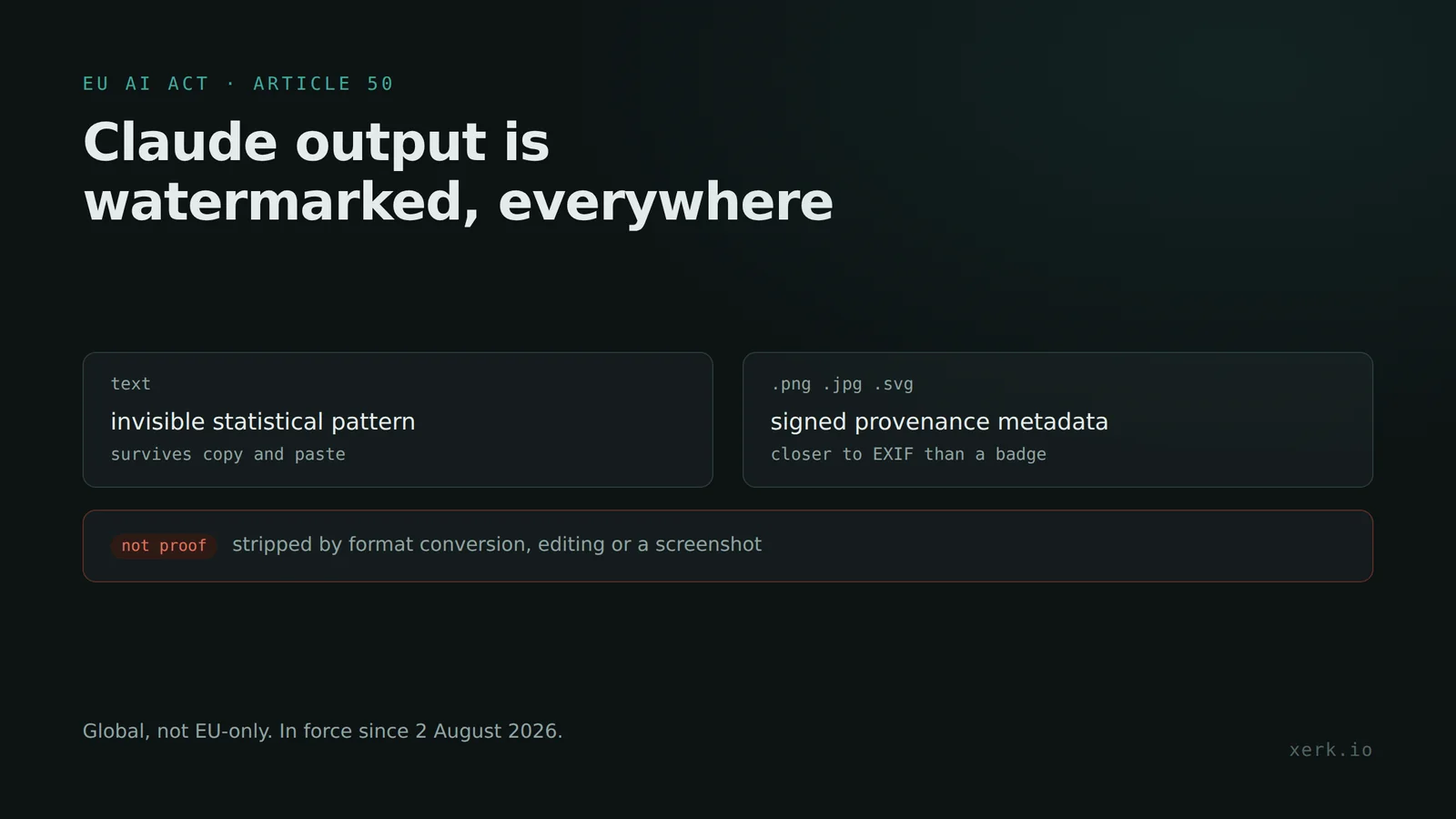
Claude output is now watermarked
Claude output now carries watermarks and signed provenance by default. Tell your users, and never treat a missing watermark as proof.